

What it is
We rebuild an existing ERP on ASP.NET Core and SQL Server while preserving your data, opening balances and the way your people already work. Our flagship example: a NetSuite ERP for a flower exporter in Kenya rebuilt as an ASP.NET Core application with the same chart of accounts, customers, vendors and history.
What you get
- Reconciled migration: trial balance, aging and stock agree to the old system before cut-over
- Table-by-table reload scripts so the migration can be re-run until the numbers match
- Cut-off date discipline: nothing back-dated slips in after the freeze
- Legacy ASP.NET WebForms to ASP.NET Core MVC/Blazor with a modern UI, same URLs where it matters
- Keep what works: stored procedures and reports are ported, not thrown away
- Parallel run and gate checks before the old system is switched off
Screens from live systems
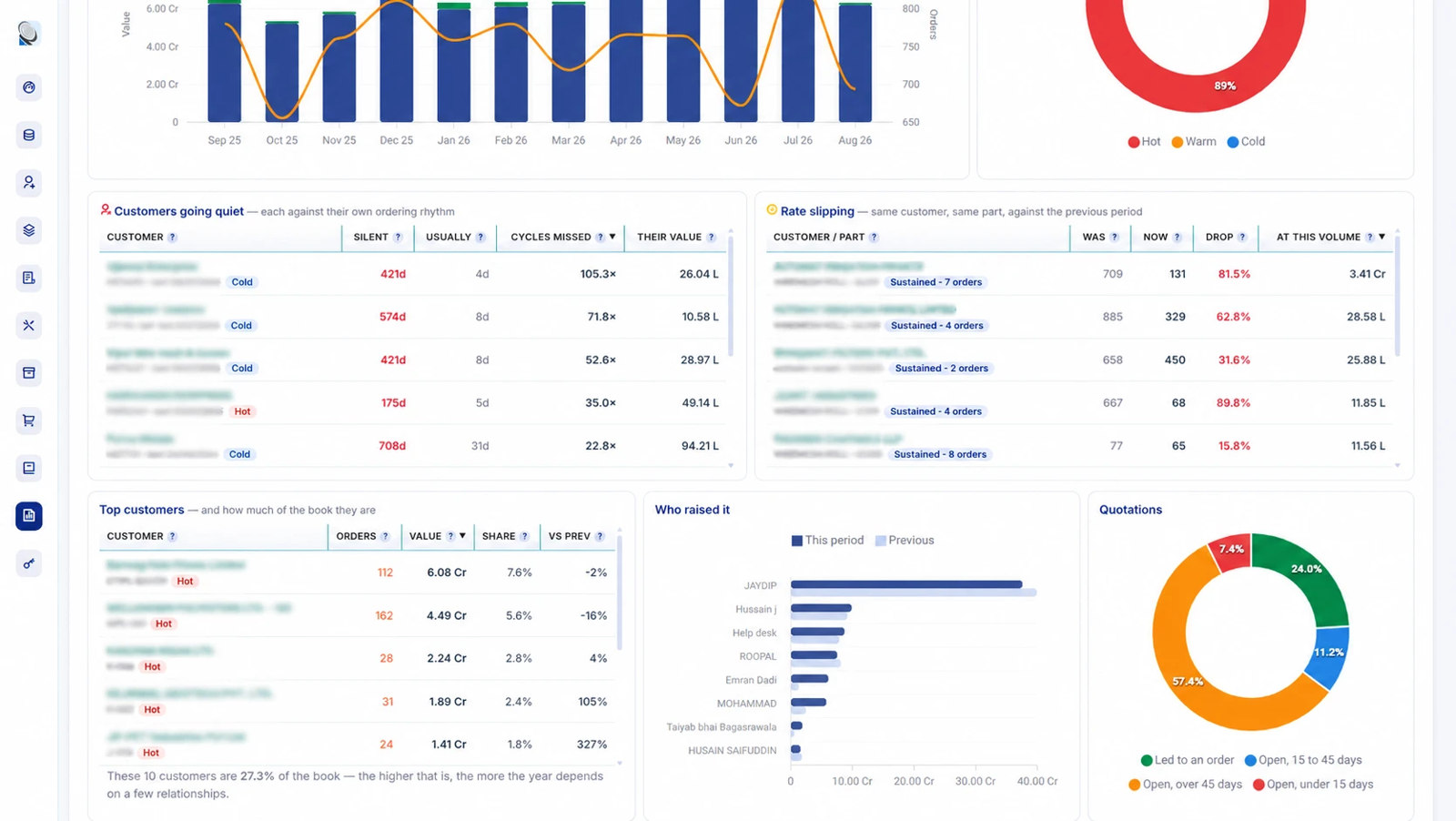

Stay, re-implement, or migrate to your own system
| What matters | Stay on the old system | Re-implement on another packaged ERP | Migrate with Sense Softech |
|---|---|---|---|
| Opening balances and history preserved | Yes | Usually balances only | Yes, reconciled before cut-over |
| Staff keep familiar screens and workflow | Yes | No, everything changes | Yes, modernised not replaced |
| Per-user subscription ends | No | No, a new one starts | Yes |
| Migration can be rehearsed and re-run | Not applicable | Rarely | Yes, until every number matches |
| You own the source code and data | No | No | Yes |
Who it suits
How the engagement runs
- Migration plan with gate checklist
- Reconciliation reports at every stage
- Rehearsal migrations on a copy
- Cut-over weekend and hyper-care
Frequently asked questions
How do I migrate from NetSuite to my own ERP?
We rebuild the modules you actually use as an ASP.NET Core application on SQL Server, then migrate customers, vendors, items, balances and history with scripts that can be re-run until the trial balance, aging and stock match NetSuite exactly. Only then is NetSuite frozen and the new system switched on. We did this for a flower exporter in Kenya.
Why do companies move away from per-user ERP subscriptions?
Because the bill grows with every user and every year, and the data sits in a system you do not control. With your own ERP you pay for the build once, own the source code and database, add users at no extra cost, and change a screen or report whenever the business changes.
Can an old ASP.NET WebForms or Access system be modernised without starting again?
Yes. We keep what works, including stored procedures, reports and the data, and move it to ASP.NET Core with a modern interface. The old and new systems run side by side with gate checks until you are confident, so there is no risky big-bang cut-over.
Can you move us off NetSuite to our own ERP?
Yes. We rebuilt a NetSuite ERP for a flower exporter in Kenya as an ASP.NET Core application with the same chart of accounts, customers, vendors and history, reconciled to the penny before cut-over.
How do you make sure no data is lost?
The migration is scripted table by table and re-run on a copy until trial balance, aging and stock agree with the old system. Only then do we freeze the old system and cut over.
Can you modernise an old ASP.NET WebForms or Access application?
Yes. We port the working parts, including stored procedures and reports, to ASP.NET Core with a modern UI, keep the URLs that matter, and run the two side by side until you are confident.
Customers using this
NetSuite ERP rebuilt on ASP.NET Core
The customer's NetSuite accounts and inventory were rebuilt as an ASP.NET Core application, with a reconciled migration of vendors, customers, balances and history that could be re-run until every number matched.
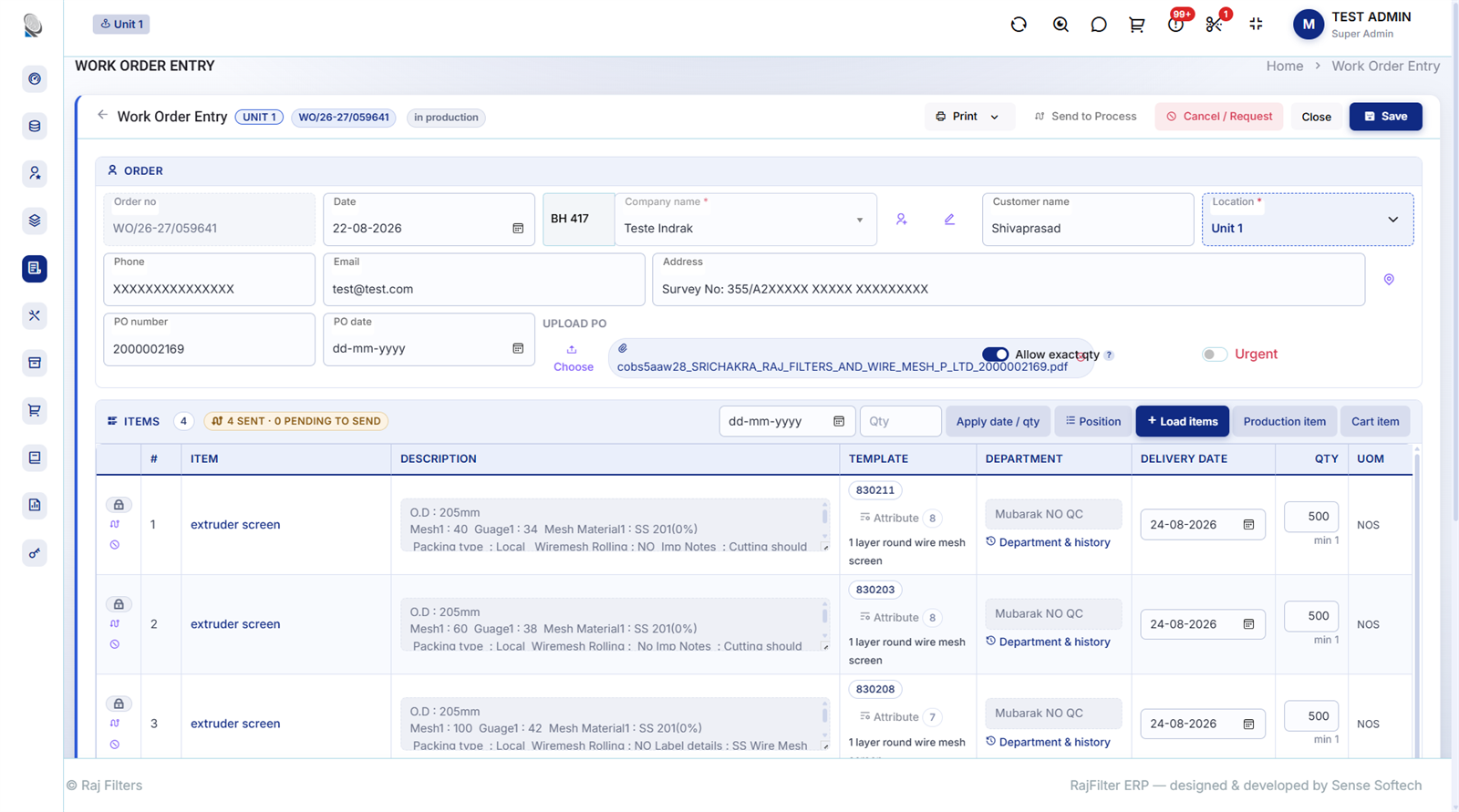
Filter manufacturer moves from WebForms to a modern ERP
A legacy ASP.NET WebForms system rewritten as ASP.NET Core: quotation, work order, production routes, packing, dispatch, purchase, CRM and full double-entry accounts, with a live production dashboard for the floor.